Rivers crisis deepens as Speaker says Governor stoking fresh turmoil


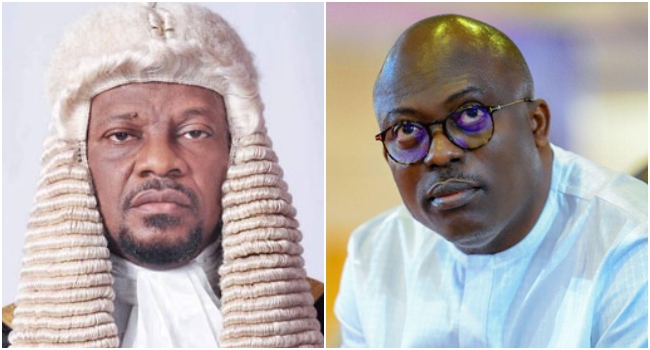
Rivers State has been thrown back into political uncertainty as Speaker of the State House of Assembly, Martin Amaewhule, launched a scathing attack on Governor Siminalayi Fubara, accusing him of deliberately reigniting tensions in the volatile, oil-rich state.
Amaewhule openly challenged the governor’s claim that he was unable to secure a meeting with lawmakers, flatly calling the statement untrue. He said the governor’s remarks were a calculated move to create an impression of a communication breakdown, warning that such tactics risk plunging the state into yet another round of political turmoil. “First and foremost, the governor lied when he said he hasn’t been able to meet with members of the Rivers State House of Assembly,” the Speaker declared. “Shortly after the State of Emergency was called off, the FCT Minister called a meeting with the governor and principal officers of the Assembly. I can confirm I was in that meeting.”
The Speaker insisted that these meetings were not isolated, stressing that lawmakers had interacted with Governor Fubara on multiple occasions. He described Fubara’s public comments as “insincere” and “poor leadership”, urging the people of Rivers State to disregard the governor’s claims and remain vigilant amid intensifying political tensions.
Governor Fubara, however, pushed back strongly against talk of any rift. Speaking on Wednesday at the commissioning of the extended 28.4-kilometre Ahoada–Omoku Road, he insisted that reports of a strained relationship with either federal or state lawmakers were unfounded. He argued that plans for a meeting with the legislators were already underway and said anyone suggesting he was avoiding them “is not telling the truth”.
Fubara, who defected from the PDP to the APC on Tuesday, used the event to rally Rivers residents to support President Bola Tinubu. He explained that his predecessor and now FCT Minister, Nyesom Wike, alongside elder statesman Ferdinand Alabraba and other leaders, had been expected to convene the proposed meeting. The governor also said his move to the APC was not borne out of personal ambition but out of a desire to restore peace and ensure steady development in the state. He encouraged his supporters to shun divisive politics and stay committed to both the state government and the President.
The political feud between Fubara and Wike erupted less than two years after the governor succeeded Wike in 2023, with both men locked in a fierce battle for control of the state’s political machinery. The crisis escalated dramatically in March, when President Tinubu, citing Section 305 of the 1999 Constitution, declared a state of emergency in Rivers State, suspending the governor, his deputy, and members of the House of Assembly for six months. He warned that he could not continue to watch the tensions spiral without intervention.
A retired naval chief, Vice Admiral Ibok-Ete Ibas (rtd), was immediately sworn in as the sole administrator of the state. But by June, the President held a reconciliation meeting with Fubara, Wike, Amaewhule, and other Assembly members, signalling a thaw in relations. The two former allies were later seen together at a state event, further fuelling speculation that the crisis was easing.
On September 17, President Tinubu formally lifted the emergency rule in Rivers State, saying fresh intelligence showed “a new spirit of understanding” and “potent enthusiasm” among key actors for a return to full democratic governance—an outcome he described as a significant achievement for the country.