ECOWAS deploys force as instability rattles west africa


The West African regional bloc has warned that it will impose targeted sanctions on any individuals or groups seeking to obstruct Guinea-Bissau’s return to civilian rule after last month’s military coup.
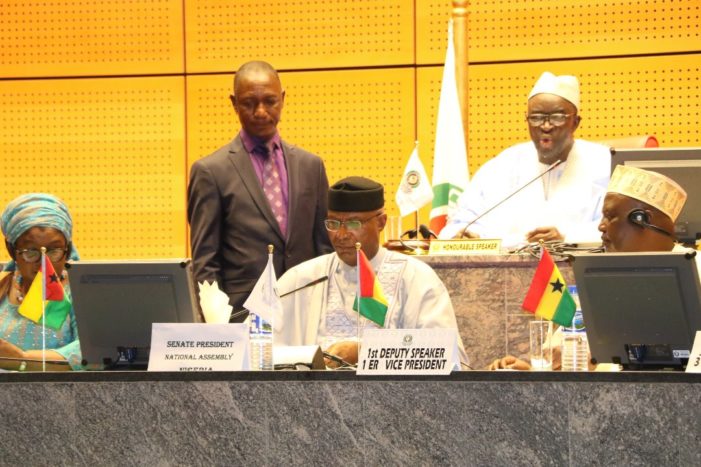
The warning was issued on Sunday at the close of a biannual summit in Abuja, where leaders from across the region met amid growing alarm over renewed instability in West Africa. Discussions were dominated by the successful military takeover in Guinea-Bissau and a separate, failed coup attempt in Benin.
Speaking to reporters after the meeting, the president of the ECOWAS Commission, Omar Alieu Touray, said the organisation would not tolerate any actions designed to derail the transition process. He added that the regional peacekeeping force deployed in Guinea-Bissau since 2022 had been authorised to provide protection for political leaders and key national institutions.
The two recent threats to civilian rule have unsettled the bloc, which formally condemned both developments during the summit. In response to the attempted coup in Benin, Nigeria deployed fighter jets and troops alongside soldiers from Côte d’Ivoire to support the civilian authorities, while further reinforcements are expected from Ghana and Sierra Leone.
ECOWAS has already been weakened by a wave of coups between 2020 and 2023 in Burkina Faso, Guinea, Mali and Niger, all of which remain under military rule.
Although the summit had been planned before the latest upheavals, they featured prominently in deliberations, alongside preparations for elections scheduled to hold in Guinea on December 28. Junta leader Mamady Doumbouya is contesting the vote despite an earlier pledge not to seek office, while exiled opposition leader and former prime minister Cellou Dalein Diallo has been excluded from the process.
Despite these concerns, ECOWAS described the forthcoming poll as a step forward in Guinea’s transition, expressing hope that it would be credible, transparent and fair.
Regional leaders also discussed the deteriorating security situation in the Sahel, where jihadist insurgencies continue to spread across Burkina Faso, Mali and Niger. The three countries, now under junta rule, have withdrawn from ECOWAS and formed a separate alliance, raising fresh questions about regional cooperation on security.
Sierra Leone’s president, who currently holds ECOWAS’s rotating chairmanship, warned that violence in the Sahel posed a shared threat, stressing that no country could insulate itself from instability beyond its borders.
Leaders from Guinea and Guinea-Bissau, both suspended from ECOWAS following their military takeovers, were absent from the summit. Nigeria’s president was also not present and was represented by the vice president.
Beyond military coups, the bloc expressed concern about wider democratic backsliding in the region. In October, Côte d’Ivoire re-elected President Alassane Ouattara to a fourth term in an election that saw several opposition challengers barred from contesting.