Only one version of tax law exists, FG insists amid backlash


The Federal Government has pushed back forcefully against claims that Nigeria’s newly enacted tax reform laws were secretly altered after passage, insisting there is only one authentic version of the legislation signed by President Bola Tinubu.
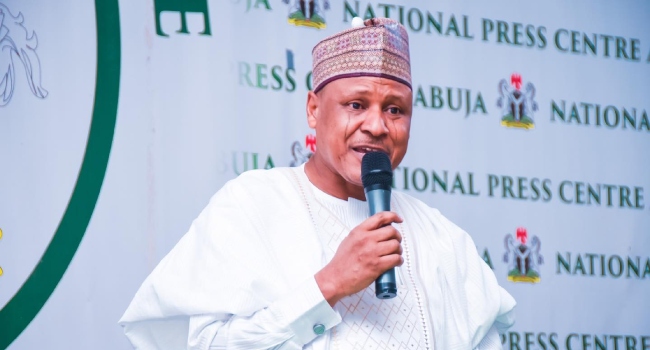
The Minister of Information and National Orientation, Mohammed Idris, made the clarification on Monday in Abuja at an end-of-year news conference, amid growing controversy over the laws scheduled to take effect on January 1, 2026. Idris dismissed allegations that the tax reforms were modified between approval by the National Assembly and their eventual gazetting, stressing that the document assented to by the president remains unchanged.
According to the minister, the tax laws followed due legislative process, including consultations, committee work and debates in both chambers of the National Assembly, before receiving presidential assent. He said the Federal Government was proceeding with preparations for implementation, insisting that no hidden amendments had been introduced.
“The Federal Government is going ahead with the commencement of implementation, noting as changed,” Idris said, while maintaining that the integrity of the laws had not been compromised.
However, Idris acknowledged that concerns had been raised within the National Assembly over alleged discrepancies between the version passed by lawmakers and the one later gazetted. He said the executive would defer to the legislature to determine whether any inconsistencies existed.
“I think it is important for us to wait for the National Assembly to look at this again to tell us whether there were discrepancies or not,” he said, adding that the matter was firmly within the jurisdiction of the legislature. “As far as the government of Nigeria is concerned, there’s only one version of that tax document.”
The dispute was triggered by claims from a lawmaker representing Kebbe/Tambuwal Federal Constituency in Sokoto State, Abdussamad Dasuki, who raised alarm in the House of Representatives. Dasuki alleged that provisions contained in the gazetted tax laws differed from what lawmakers debated and approved.
The controversy has fuelled wider political unease. The tax reform bills faced stiff resistance during legislative consideration, particularly from some northern lawmakers, who warned of potential economic and regional consequences. Tensions escalated further after Dasuki claimed that certain clauses in the published laws were never discussed or passed on the floor of the National Assembly.
Prominent political figures have also weighed in. Former Vice President Atiku Abubakar and the 2023 Labour Party presidential candidate, Peter Obi, have both called for the suspension of the laws’ implementation pending clarification of the disputed provisions.
Despite the backlash, the Chairman of the Presidential Fiscal Policy and Tax Reforms Committee, Taiwo Oyedele, has dismissed claims of secret alterations. He warned that failure to implement the new tax laws from January 1 could have serious consequences for Nigeria’s fiscal stability, underscoring the government’s determination to press ahead.