
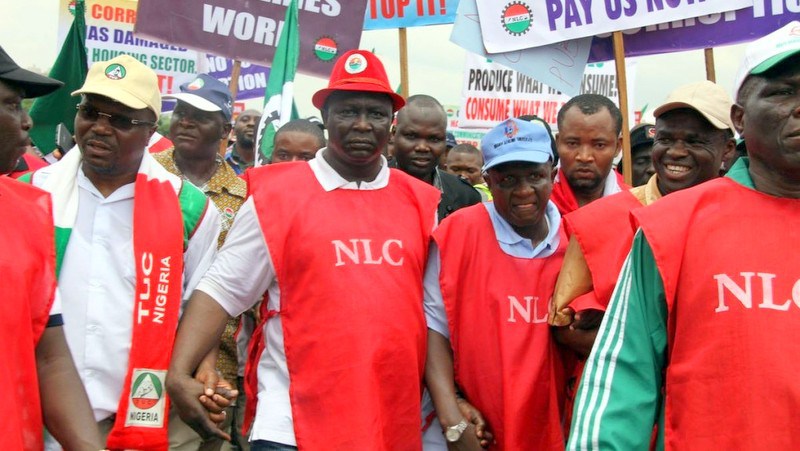
NLC warns FG over wages, taxes as hardship deepens


The Nigeria Labour Congress has urged the Federal Government to urgently address workers’ wages and review what it described as regressive tax policies, warning that continued delays and uneven compliance could worsen economic hardship for millions of Nigerians.
The call was made on Wednesday by the NLC President, Joe Ajaero, at the 85th birthday celebration and book launch of the union’s founding President, Hassan Summonu, OON, held at the Shehu Musa Yar’Adua Auditorium in Abuja.
Speaking before an audience that included family members, government officials and labour leaders, Ajaero described Summonu as a towering figure in Nigeria’s working-class struggle, whose life and leadership continue to inspire generations of workers.
He said the title of Summonu’s memoir, Organise, Don’t Agonise, captured the enduring philosophy of the labour movement, describing it as more than a book title but a guiding creed that has shaped organised labour in Nigeria.
Ajaero recalled the inauguration of the Hassan Summonu Centre for Leadership and Governance in Lagos last year, noting that it reaffirmed labour’s commitment to preserving the legacy of its founding president and the broader struggle of Nigerian workers.
Turning to current economic challenges, the NLC president expressed concern over the slow and uneven implementation of the new National Minimum Wage, signed into law by President Bola Tinubu on July 29, 2024, which increased the monthly wage from N30,000 to N70,000.
He said many state governments, private sector employers and parastatals were yet to comply fully, citing financial constraints and rising inflation, even though the law was clear on workers’ entitlements.
Ajaero warned that the congress was monitoring violations and would pursue enforcement actions and legal steps where necessary, stressing that continued delays posed serious risks to workers’ welfare amid the rising cost of living.
He also criticised recent tax laws, describing them as unfair and exclusionary, arguing that Nigerian workers and the poor, who bear the heaviest tax burden, were largely sidelined during the law-making process.
According to him, the outcome has been policies that further impoverish workers, despite earlier warnings from organised labour.
Ajaero further called for the immediate constitution of the PENCOM Board, warning that prolonged delays and public grandstanding undermined governance, tax administration and the rule of law.
He urged the Federal Government to engage meaningfully with organised labour in policy formulation, insisting that decisions on wages, taxation, fuel pricing and social services must reflect the voices of workers and the broader population.
The event also celebrated Summonu’s long-standing contributions to labour activism, with Ajaero pledging that the labour movement would continue to uphold the central message of his book by organising, challenging authority and fighting for economic justice.