
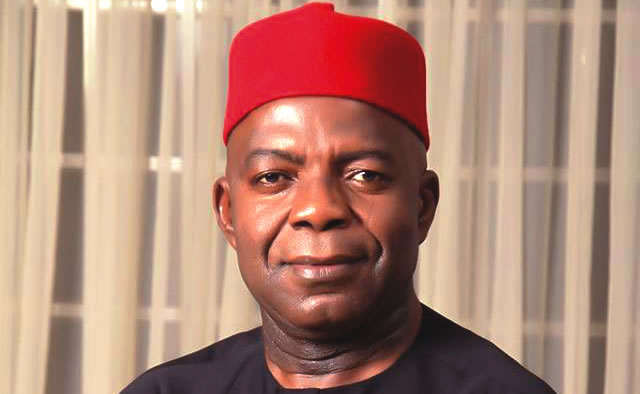
Biogas investment helps abia avoid impact of repeated national grid collapses-Otti


Abia state says it has insulated itself from the effects of repeated national grid collapses by investing in electricity generation from organic waste, a move the governor says has reduced dependence on the federal power system.
alex otti, the state governor, said on thursday that abia had begun converting waste into biogas for electricity generation, allowing parts of the state to continue receiving power even when the national grid fails.
speaking at the government house in umuahia, otti said the initiative was part of a broader effort to decentralise power supply and place electricity regulation under state control.
he said the arrangement followed negotiations with the enugu electricity distribution company, which he confirmed had agreed to the state’s plan to take over electricity distribution assets.
“this is a pilot programme. instead of throwing away waste, we can turn it into clean energy, and this will enable us to power many locations, particularly the umuahia industrial clusters,” otti said.
he added that the state was in the process of raising funds to settle obligations to eedc, noting that the transition was already yielding results.
according to the governor, abia formally assumed responsibility for electricity regulation on 24 december, when the abia state electricity regulatory authority took over oversight from the nigerian electricity regulatory commission.
“everything about generation, transmission and distribution is now regulated within the state,” he said, describing the move as essential to improving efficiency and energy independence.
otti said recent national grid collapses had not affected abia because significant portions of the state’s power infrastructure were already under local control, similar to the aba integrated power project that supplies electricity to industrial areas in aba.
the national grid collapsed for the second time in 2026 on tuesday, plunging large parts of nigeria into darkness.
electricity generation reportedly fell from more than 4,500 megawatts to zero by mid-morning, after all 23 power generation plants connected to the grid lost output, leaving the country’s 11 distribution companies without power allocation.
grid failures have been linked to technical faults, poor maintenance of transmission infrastructure and instability in generation capacity.
reacting to the latest collapse, former labour party presidential candidate peter obi described it as evidence of a deepening national crisis.
in a statement posted on x, obi said the incident mirrored events of the previous year, noting that nigeria’s first grid collapse in 2025 had also occurred in january and was followed by several others.
he said nigeria had ranked among the worst globally for access to electricity for three consecutive years, with nearly 100 million people lacking reliable power.
comparing nigeria with other african countries, obi said the disparity in electricity generation was stark.
while south africa and egypt each generate more than 40,000 megawatts, and algeria over 50,000 megawatts, nigeria produces about 5,000 megawatts despite having a population of more than 240 million, he said.
obi attributed the persistent power crisis to leadership failures, arguing that the sector required competent and committed governance.
meanwhile, the nigeria national grid said long-term solutions to recurring system collapses included metering, grid expansion and infrastructure upgrades.
the agency said that while metering alone would not prevent outages, it remained a critical foundation for improving efficiency and stabilising electricity supply.