
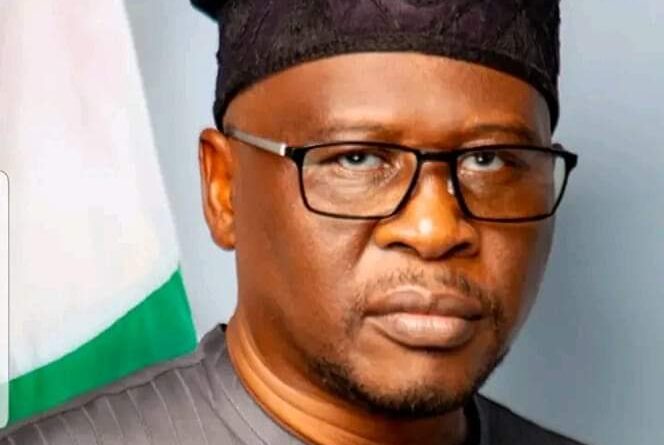
Adamawa 2027: who will follow Fintiri’s footsteps in fostering equal opportunity for all?


In a state long defined by delicate religious and ethnic balances, the administration of Ahmadu Umaru Fintiri has built a reputation for confronting one of Adamawa’s most sensitive governance challenges: the perception of disparity in political appointments between Christians and Muslims.
For years, public discourse in the state was coloured by quiet grievances over representation. Allegations — sometimes exaggerated, sometimes grounded — of lopsided appointments risked deepening mistrust in a region already vulnerable to division. Fintiri’s approach, however, has been to treat inclusivity not as a slogan but as a governing principle.
Appointments across key ministries, agencies and political offices have reflected a conscious balancing act. Christians and Muslims have been given visible roles, not merely to tick boxes but to ensure governance mirrors the diversity of Adamawa itself. This deliberate inclusiveness has helped calm long-standing anxieties and foster a stronger sense of belonging.
Beyond religion, Fintiri’s style has cut across ethnic lines. Adamawa, home to a mosaic of tribes, has historically grappled with marginalisation. Yet under his leadership, opportunities — from appointments to development projects — have been spread in a way that signals unity rather than dominance, from the northern to the southern zones.
This has not eliminated political disagreement — nor should it. But it has reframed it. Debate is shifting, however gradually, from identity and exclusion to performance and delivery. In a plural society, that is no small feat.
Equity, as this administration suggests, is not accidental; it is deliberate. It requires political will, constant calibration and an understanding that peace is often rooted in fairness. By carrying people along, irrespective of tribe or religion, Fintiri has set a benchmark that will not easily be ignored.
As 2027 approaches, the question is no longer whether inclusive governance matters in Adamawa. It plainly does. The real question is who among the emerging political actors possesses both the discipline and the sincerity to sustain it.
So far, the signs are not especially reassuring. Among those who have declared ambitions to succeed Fintiri, few have demonstrated the same commitment to cross-faith inclusion. Despite claims of empowerment programmes, many appear uneven in reach and impact.
More troubling is the pattern in personal appointments. Some aspirants have populated their inner circles largely with individuals of the same faith, raising doubts about their readiness to uphold the balance that has come to define the current administration. Who, then, can sustain this legacy?
It is true that many of these contenders have held public office or served in various capacities. Yet their present choices — particularly in the appointment of aides — raise legitimate concerns about their commitment to inclusivity. If these early indicators are anything to go by, hopes for equitable representation across faiths may be under strain.
Fintiri may not have resolved every challenge. But he has reshaped expectations. In doing so, he leaves behind not just policies, but a standard against which his successors will inevitably be judged.