
Nigeria dismisses US travel advisory as routine, insists security situation stable


The Federal Government has downplayed a recent travel advisory issued by the United States authorising the departure of non-emergency personnel from its embassy in Abuja, describing the move as a routine precaution that does not reflect Nigeria’s overall security situation.
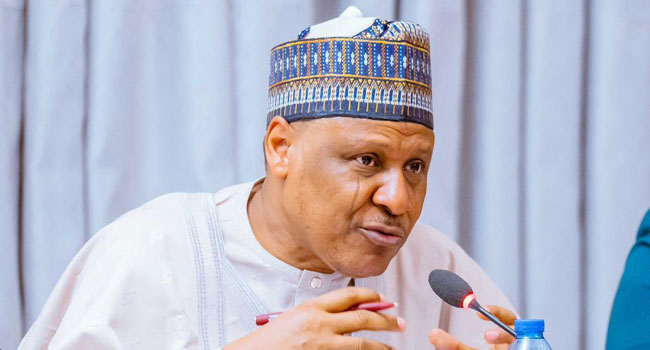
In a statement released by the Federal Ministry of Information and National Orientation, the Minister, Mohammed Idris, said public institutions across the country remain fully operational, with no disruption to governance, economic activities or daily life.
According to the statement, the US decision was guided by internal protocols and should not be interpreted as evidence of a general breakdown of law and order.
“While we acknowledge isolated security challenges in some areas, there is no general breakdown of law and order, and the vast majority of the country remains stable,” the minister said.
He added that ongoing security operations had disrupted criminal networks, reduced the activities of armed groups and improved safety in vulnerable communities.
“Our security agencies remain actively engaged in protecting lives and property, and the results of these efforts are increasingly evident,” he said.
The government also reiterated that Nigeria remains open to business, travel and investment, stressing that economic reforms are strengthening investor confidence and enhancing the country’s global standing.
Idris further noted that continued engagement by international partners reflects confidence in Nigeria’s stability and long-term prospects.
While acknowledging the right of countries to issue travel advisories, the government called for balanced and up-to-date reporting, urging partners to engage directly with Nigerian authorities for a more accurate assessment of the situation on the ground.
The reassurance follows an advisory issued by the United States citing worsening security concerns, including crime, terrorism, kidnapping and civil unrest.
The advisory maintained Nigeria at Level 3 (“reconsider travel”), while designating some regions under Level 4 (“do not travel”). It also flagged threats from armed groups such as Boko Haram, as well as unrest in parts of the Niger Delta and the South-East.
In addition, it raised concerns about limited access to healthcare in high-risk areas and constraints on US government assistance in such locations.
The development comes after earlier visa restrictions imposed by the United States in 2025 on certain categories of Nigerian travellers, citing security and immigration-related concerns.