

Opinion: Adamawa 2027 and the comedy of gubernatorial aspirants


As political activities gather pace ahead of the 2027 elections, the unfolding drama in Adamawa State increasingly resembles a theatre of the absurd rather than a serious contest for leadership.
In recent months, declarations of interest in the governorship race have come thick and fast. Press statements, consultations and carefully staged visits have created the impression of a crowded and competitive field. Yet beneath the surface, much of it appears less like genuine political mobilisation and more like a comedy of ambition.
It is, frankly, laughable that many of those publicly declaring their intention to govern Adamawa would struggle to win even a councillorship election in their respective local government areas. Electoral strength is not built on noise or visibility alone; it rests on verifiable grassroots support something a number of these aspirants have never tested.
For some, even claims of past political success are less convincing upon closer scrutiny. A handful have occupied positions not through the rigours of the ballot but through appointment or political patronage. To now project themselves as statewide contenders stretches credibility and underscores the widening gap between perception and political reality.
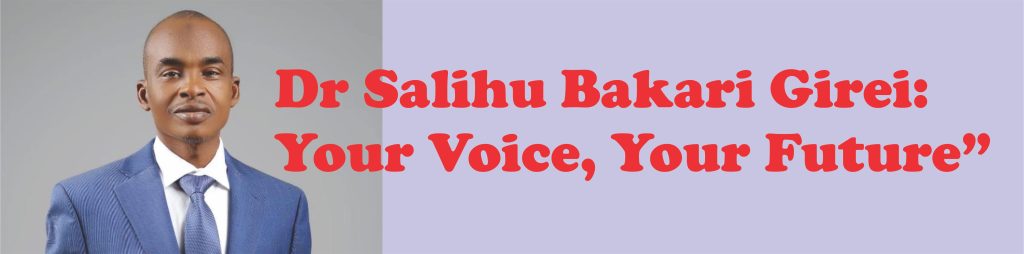
More telling, however, is the distinction between declaring to contest and actually committing to the race. In Nigerian politics, the true test of seriousness often begins with the purchase of nomination forms. With the All Progressives Congress (APC) expected to release its governorship forms any moment from now, that moment of truth is fast approaching.
It is one thing to announce an intention; it is quite another to back it with the financial and organisational capacity required to sustain a campaign. The reality is that some of those currently making loud declarations may not have the resources to even purchase the party’s nomination form. Yet, declarations continue to flood the public space, giving the entire process the feel of a rehearsed spectacle.
What is playing out is less a contest of ideas and more a theatre production, complete with actors, scripts and predictable plot twists. For some aspirants, the exercise appears to be little more than ego boosting a chance to insert their names into public discourse, negotiate relevance or position themselves for future appointments.
Experience suggests that once the forms go on sale, the field will thin dramatically. The rhetoric will give way to reality, and many of today’s “aspirants” will quietly recalibrate. It will not be surprising to hear a wave of statements along the lines of “I have stepped down for so-and-so” a familiar refrain in Nigerian politics.
At that point, the true contenders will begin to emerge: those with the structure, resources and political capital to mount a credible challenge. Until then, much of what is being witnessed remains performative.
There is also a category of participants whose role is less about winning and more about influencing outcomes the jesters and spoilers who enter the race to divide votes, test alliances or serve unseen interests. Their presence further complicates an already crowded and confusing field.
For the electorate, the task is to look beyond the noise. Leadership is too serious a responsibility to be reduced to theatrics. As Adamawa inches closer to 2027, the hope is that substance will eventually replace spectacle, and that the contest will evolve from a comedy of declarations into a genuine competition of ideas, competence and vision.
Until then, the curtain remains up on a political stage where not all actors intend to see the final act.