
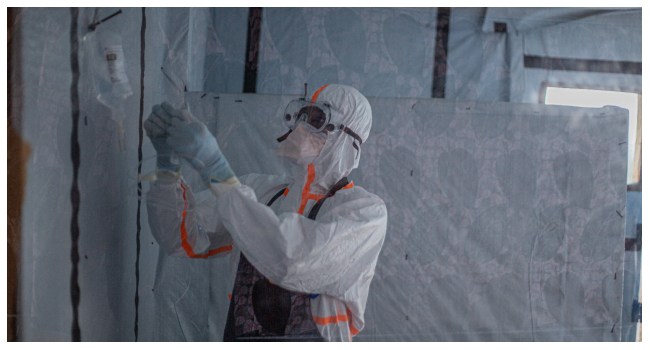
FG confirms Ebola case in Abuja, traces 44 contacts


The Federal Government has announced a confirmed case of Ebola virus disease in Abuja, with health authorities identifying 44 close contacts as efforts intensify to prevent further transmission.
The Minister of Health and Social Welfare, Prof Muhammad Ali Pate, disclosed this in a statement on Tuesday, 20 October 2026, following laboratory confirmation of the infection.
According to the statement, the patient, a woman who recently arrived in Nigeria from Uganda, was admitted to a private hospital in the Federal Capital Territory, where she received treatment for several days before testing positive.
“A woman who recently arrived in Nigeria on an international flight from Uganda, was admitted to a private hospital in the FCT, where she received treatment for several days before the diagnosis was confirmed,” the statement said.
The patient has been isolated and is receiving medical care.
Pate said the Nigeria Centre for Disease Control and Prevention (NCDC), the Federal Ministry of Health and the FCT Health Services Secretariat had commenced coordinated measures to contain the infection.
Public health officials have identified 44 close contacts and are tracing other potentially exposed individuals, including healthcare workers, patients, caregivers and airline passengers.
Surveillance has been strengthened, while infection prevention and control measures are being reinforced at the hospital where the patient received treatment.

The minister directed healthcare facilities nationwide to remain vigilant, promptly isolate suspected cases and report them to public health authorities.
He urged Nigerians to maintain personal hygiene, avoid contact with the bodily fluids of suspected patients and seek medical guidance when symptoms develop.
“Anyone who develops symptoms should avoid close contact with others and call public health authorities for guidance before visiting a healthcare facility,” the statement advised.
Symptoms include fever, severe weakness, headache, vomiting and diarrhoea.
The development follows an earlier NCDC advisory warning of the risk of Ebola entering Nigeria amid outbreaks elsewhere in Africa.
Ebola spreads through direct contact with infected bodily fluids or contaminated materials. Its incubation period ranges from two to 21 days.
Nigeria successfully contained an Ebola outbreak in 2014 through coordinated surveillance, isolation and contact tracing.
Pate assured Nigerians that the country possessed the experience and public health capacity to respond effectively, while emphasising the importance of public cooperation.
The government said investigations were continuing and advised the public to report suspected cases through the NCDC toll-free number, 6232.