
Northern leaders back fast-track move for state police


Northern leaders, including governors and top traditional rulers, have thrown their weight behind the swift rollout of state policing, insisting it is the only realistic way to confront the wave of insecurity crippling the region.
They warned that Nigeria’s centralised police structure has become wholly inadequate for a country of more than 200 million people, with vast stretches of ungoverned territory and too few officers to provide meaningful protection. At a crucial meeting in Kaduna on Monday, the leaders said attempts to push divisive narratives risk undermining national cohesion at a time unity is desperately needed.
Hosted by Kaduna State Governor Uba Sani and chaired by Gombe State Governor Inuwa Yahaya, the gathering came as northern communities continue to battle banditry, kidnappings, farmer-herder clashes and widespread economic disruption. Governor Sani said the meeting reflected their shared determination to take a coordinated approach to the worsening security crisis, adding that calls for state police were now unavoidable.
He said claims that northern governors had grown complacent were politically motivated and false, stressing that they regularly compare strategies, share intelligence and hold one another to account. “Nigeria’s centralised policing model can no longer meet the demands of today’s realities,” he said, noting that fewer than 400,000 officers are currently responsible for the entire country.
Governor Yahaya, in his remarks, said the security crisis cuts across religion and ethnicity, with both Muslims and Christians suffering from relentless attacks. He praised President Bola Tinubu’s “decisive efforts” to secure the country but warned that while international support is welcome, it must not threaten Nigeria’s sovereignty. He urged leaders to reject simplistic or divisive narratives designed to sow distrust among communities.
Yahaya said insecurity in the region is rooted in longstanding issues such as underdevelopment, illiteracy, lack of opportunity, environmental degradation and climate pressures, all of which fuel conflicts and push rural communities into desperation. He noted that reversing the trend will require massive investment in education, infrastructure, and economic opportunity—beginning with addressing the alarming number of out-of-school children roaming northern streets.
“We must work hand in hand to restore stability,” he said. “Our problems are local, and their solutions lie amongst us.”
He reaffirmed the forum’s firm backing for state police reforms and urged the National Assembly to prioritise the constitutional amendments needed to make it a reality. He also called on federal and state lawmakers to work closely with the presidency to fast-track the reforms.
Traditional rulers, led by the Sultan of Sokoto, Saad Abubakar, echoed the concerns, warning that insecurity is inflicting deep social and economic damage on northern communities. The Sultan urged governors to pay greater attention to critics, saying constructive feedback should be used to strengthen governance rather than dismissed. He also called for more frequent engagement between governors and traditional rulers across the region.
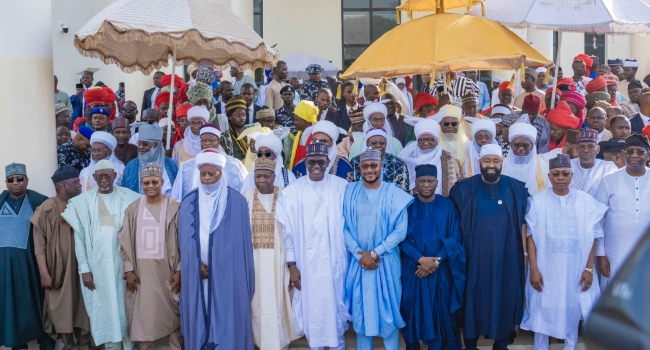
Governors of Kaduna, Gombe, Niger, Zamfara, Nasarawa and Bauchi were present, alongside other representatives and leading northern monarchs.