
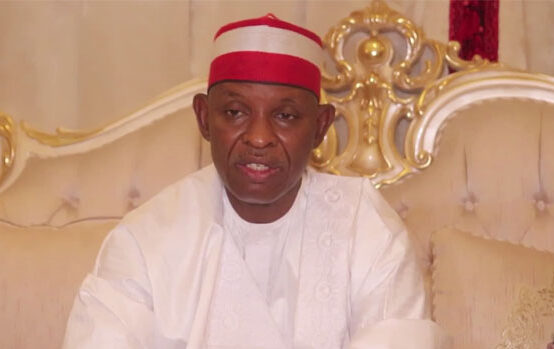
2027: Ganduje pledges full APC support for Abba Yusuf


Immediate past National Chairman of the All Progressives Congress (APC), Abdullahi Ganduje, has assured Kano State Governor, Abba Kabir Yusuf, of victory in the 2027 governorship election and pledged full support for his second-term bid following his defection from the New Nigeria Peoples Party (NNPP) back to the APC.
Ganduje made the pledge on Monday at a ceremony welcoming Yusuf into the ruling party at the Coronation Hall, Government House, Kano, describing the move as a historic homecoming and a major boost for the APC in the state.
“You will win your second term in 2027. We have spoken to all aspirants, and they have agreed to support you,” Ganduje said, adding that Yusuf automatically assumes leadership of the APC in Kano State in line with party tradition.
“In APC, all serving governors are leaders of the party in their respective states. Therefore, you are the leader of the APC in Kano State,” he declared.
Ganduje recalled Yusuf’s political journey within the APC, saying his return marked the resolution of past political differences.
“We were together in APC. The party was formed with you, but because of political differences and redirection, you left. Now we are thankful that you are back to your party and your home,” he said.
Describing Yusuf as a progressive politician, Ganduje said the governor’s leadership style and policies aligned with APC ideology and assured him of equal treatment within the party.
Governor Yusuf formally rejoined the APC on Monday after resigning from the NNPP on January 23, citing persistent internal crises, legal battles and the need to protect Kano State’s developmental interests.
In his resignation letter to the chairman of his Diso-Chiranchi Ward in Gwale Local Government Area, Yusuf said the decision followed wide consultations and careful reflection.
“Leadership must rise above comfort, sentiment or personal selfishness. That is why, after careful reflection and consultation, I relinquish my membership of NNPP and join the party that is better for Kano,” he said.
The governor explained that the move was aimed at aligning Kano with the Federal Government, fostering unity and ending political isolation.
“We are choosing progress over personal desires. Our loyalty is to Kano first,” Yusuf added, urging former political allies, including Rabiu Kwankwaso, not to view the defection as personal.
Yusuf’s return to the APC was accompanied by 22 members of the Kano State House of Assembly, eight members of the House of Representatives and all 44 local government chairmen, signalling a major political realignment in the state.
The defection also triggered the resignation of Mustapha Rabi’u Kwankwaso, Kano State Commissioner for Youth and Sports Development and son of former governor and senator, Rabiu Kwankwaso, from the State Executive Council.
In a statement, Mustapha Kwankwaso said he resigned with a heavy heart, thanking Governor Yusuf for the opportunity to serve and calling for sustained attention to youth and sports development in the state.
Deputy President of the Senate, Senator Barau I. Jibrin, also welcomed Yusuf to the APC, promising to work with him to advance development in Kano State and reaffirming loyalty to President Bola Tinubu’s Renewed Hope Agenda.
Meanwhile, the NNPP condemned the defection, with its Deputy National Chairman, Prince Nweze Onu, describing it as a betrayal of the electorate.
Onu dismissed claims that control of state governments would guarantee President Tinubu’s re-election in 2027, insisting that the contest would be decided by Nigerians rather than political officeholders.
He defended the NNPP as united and grassroots-driven, rejecting Yusuf’s claims of internal crises and urging party members to remain focused on preparations for the 2027 elections.
The APC also rejected claims that the ruling party or President Tinubu enticed opposition governors to defect.
According to the party, recent defections were voluntary decisions by political leaders seeking to align with the administration’s agenda, stressing that governors serve as political heads of the party in their states within a collaborative leadership structure.