
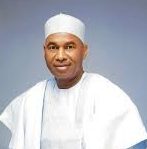
Adamawa 2027: who knows Aminu Ahmed Tijjani Galadima?


As the race towards the 2027 governorship election in Adamawa State gathers pace, a familiar pattern is emerging: a crowded field of aspirants, bold declarations of intent, and a widening gap between political ambition and grassroots relevance.
Among those mentioned within the All Progressives Congress (APC) is Tijani Ahmed, a former secretary of the Petroleum Technology Development Fund (PTDF). While his record as a technocrat may command respect in policy circles, his political visibility within Adamawa appears limited. For many observers, Ahmed ranks among the least known aspirants in a contest where name recognition and local networks remain critical.
In a state where politics is shaped by community ties and long-standing relationships, familiarity often determines viability. Yet there is a persistent perception that even the average voter on the streets of Adamawa may struggle to identify Ahmed or connect him to a political base. Some party insiders also question his depth of engagement with key APC figures across the state.

This reflects a recurring miscalculation in Nigerian politics — the belief that success in national assignments automatically translates into electoral strength. Experience suggests otherwise. A strong technocratic profile does not necessarily equate to grassroots appeal.
The trajectory of Nuhu Ribadu offers a telling example. Despite his global reputation as an anti-corruption figure, Ribadu’s electoral outings fell short. His 2011 presidential bid under the defunct ACN failed to gain momentum, and in 2015, even with considerable backing, he was defeated in Adamawa, finishing a distant third. His experience illustrates the limits of elite endorsement when confronted with voter sentiment.
There are growing concerns that Adamawa could witness a similar outcome in 2027 if political calculations prioritise influence over electability. The notion that a candidate could be imposed through pressure from the centre is often met with scepticism. Electoral history in the state suggests that voters tend to resist candidates perceived as lacking local legitimacy.

Compounding this is the narrative advanced by some aspirants who point to past electoral victories as proof of popularity. Yet, critics argue that some of those wins owed more to circumstance than genuine grassroots support — products of timing, alliances, or sheer luck rather than enduring political strength. In that sense, past success may not necessarily be a reliable indicator of future electability.
Equally troubling is the quality of engagement from several contenders. Instead of presenting measurable achievements from their time in public office, many continue to lean on vague promises and loosely defined “empowerment” claims. After years in government, such rhetoric risks appearing disconnected from the expectations of a more discerning electorate.
Others seem to rely heavily on the political machinery of the incumbent governor, Ahmadu Umaru Fintiri, rather than articulating their own records of service. But this raises a critical question: can the influence of an incumbent substitute for personal credibility and voter trust? Increasingly, the answer appears uncertain.
Indeed, a broader sentiment is emerging that many of the aspirants are simply not sellable to the electorate, regardless of the backing they may enjoy. Political structures and endorsements can only go so far; without genuine connection to the people, they rarely translate into votes.
There is also speculation around internal strategies within the party, including moves to position certain aspirants as placeholders for more influential figures based in Abuja. However, such calculations may prove short-sighted. While securing a party ticket through the primaries might be achievable under these arrangements, the general election presents a different challenge altogether.
Voters, rather than party insiders, ultimately decide the outcome and any perceived attempt to substitute popular mandate with political manoeuvring could face a harsh backlash at the polls. In such a scenario, both the placeholder candidate and the political benefactor risk significant electoral embarrassment.
As 2027 draws closer, the contest in Adamawa is shaping up to be more than a battle of political heavyweights — it is becoming a test of authenticity, visibility, and voter trust. Ultimately, no amount of political engineering is likely to secure victory for candidates who fail to resonate with the electorate.