
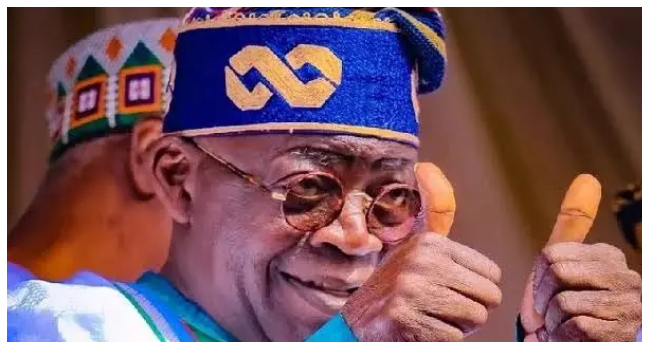
Tinubu vows to defeat insurgency as Nigeria launches new development plan


Nigeria’s president, Bola Tinubu, has pledged that his government will overcome the country’s long-running security crisis, saying terrorism and armed banditry remain his administration’s most urgent challenge.
Speaking at the National Executive Council conference on Inclusive Growth and Sustainable National Development in Abuja, Tinubu said his government was intensifying efforts to strengthen the country’s security forces.
“I am leaving here again to further find ways to strengthen our security forces to defeat terrorism and banditry. That I promise you,” the president said.
“It is what has kept all of us sleepless at night, but I assure you that we will win with determination and resilience.”
Nigeria has battled multiple security threats for more than a decade, including jihadist insurgencies in the north-east and criminal gangs known locally as bandits in the north-west and central regions. Tinubu described the violence as alien to the country’s values and a drag on economic progress.
“This unacceptable terrorism and banditry is not part of our culture; it is foreign to us,” he said. “It is an economic encumbrance if we do not find a solution.”
The president praised several state governors — including those of Borno, Katsina and Kaduna — for what he described as their efforts to protect lives and maintain security in regions most affected by violence.
Turning to the economy, Tinubu said his administration was focused on restoring macroeconomic stability after years of fiscal strain, high inflation and currency pressure.
“We are strengthening macroeconomic stability through improved revenue performance, stronger public financial management and better policy coordination,” he said.
He added that the government had prioritised infrastructure investment in transport, electricity, digital connectivity, housing and irrigation to support growth.
Tinubu also pointed to expanded social programmes aimed at vulnerable households, young people, women and small businesses, alongside the Renewed Hope Ward Development Project, which he said was designed to drive development from the grassroots.
“These successes reflect collaboration between the federal government, state and local authorities, development partners and the private sector,” he said.
The president used the event to outline the Renewed Hope National Development Plan 2026–2030, which he described as the next phase of Nigeria’s economic strategy. The plan, he said, would focus on economic diversification, human capital development, regional competitiveness and climate resilience.
Its success, Tinubu noted, would depend heavily on implementation by state and local governments, aligning national priorities with local needs.