
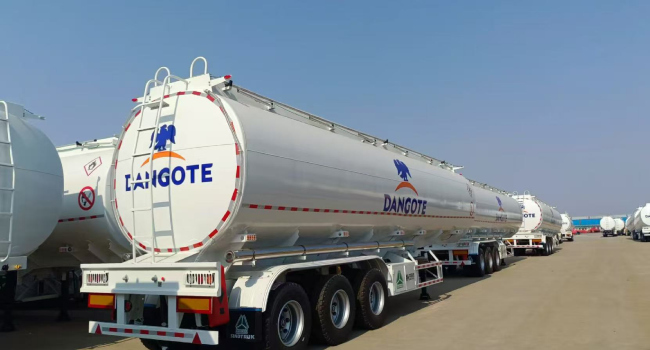
Dangote refinery blames global oil market turmoil for rising fuel costs


The Dangote Petroleum Refinery has said it remains fully exposed to global oil market forces despite Nigeria’s crude-for-naira policy, warning that surging crude prices, freight charges and insurance costs are driving up the cost of refined fuel products.
Speaking at a press briefing on Monday, the managing director and chief executive of the refinery, David Bird, said the company still buys Nigerian crude at international benchmark prices and does not benefit from discounted domestic supply.
Bird said volatility in global energy markets has significantly increased operating costs for the refinery. Although Nigeria introduced a crude-for-naira arrangement intended to allow domestic refineries to purchase crude oil in the local currency, he explained that the pricing of the commodity remains tied to international benchmarks.
“As a result, the refinery continues to purchase Nigerian crude at global market prices,” Bird said, adding that the facility remains exposed to fluctuations in crude prices, freight charges, insurance premiums and financing costs.
The impact of the volatility has been evident in the sharp rise in global crude prices, which climbed from the mid-$60 range to nearly $120 a barrel within a week.
Shipping costs have also surged significantly. According to the refinery, tanker freight rates have risen from about $800,000 to roughly $3.5m per shipment in the current market environment.
Despite the cost pressures, Bird said the refinery continues to operate at its full nameplate capacity of about 650,000 barrels per day and could potentially increase output to around 700,000 barrels per day.
The refinery has also revised its ex-depot prices, raising the gantry price of petrol – known as Premium Motor Spirit (PMS) – to ₦1,175 per litre, while the price of diesel, or Automotive Gas Oil (AGO), has increased to ₦1,620 per litre.
The adjustment marks the fourth price review in less than two weeks, according to industry platform Petroleumprice.ng. Industry sources said the new pricing template has already been communicated to marketers.
Under the revised structure, the ₦1,175 per litre petrol price represents a steep increase from the previous ₦995 per litre, while diesel has climbed from ₦1,430 per litre.
The price increases coincide with a sharp rise in international crude benchmarks. As of early Monday afternoon, Brent crude was trading at about $102.8 per barrel, up more than 10%, while West Texas Intermediate stood at around $101 per barrel.
Analysts say the turbulence in energy markets has been intensified by escalating hostilities involving the United States, Israel and Iran, which have disrupted global energy flows.
Tensions in the Middle East have affected shipping activity through the Strait of Hormuz, a strategic corridor that carries roughly one-fifth of the world’s oil supply. Security risks linked to the conflict have forced some vessels to avoid the route, slowing tanker traffic and pushing up shipping and insurance costs.
Some energy facilities in the Gulf region have also reportedly halted operations because of security concerns, tightening supply and contributing to the surge in global energy prices.
Analysts warn that a prolonged escalation could further disrupt major oil and gas supply routes and deepen volatility across international energy markets.