
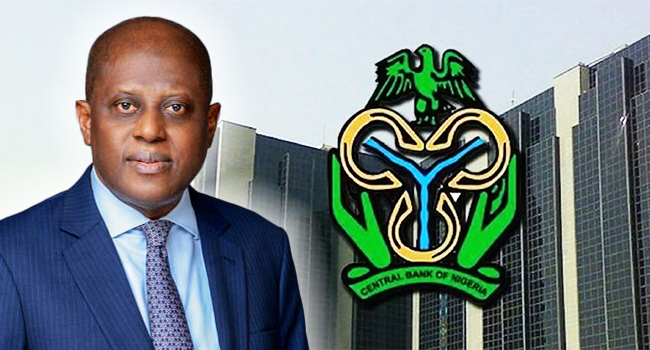
Central bank holds interest rate at 23 per cent despite drop in inflation


The Central Bank of Nigeria has kept its Monetary Policy Rate at 23 per cent, despite a further decline in the country’s inflation rate to 14.06 per cent in October.
The decision was reached at the 308th meeting of the Monetary Policy Committee, held on November 23 and 24, according to a communiqué signed by CBN Governor Olayemi Cardoso.



The committee also retained the Cash Reserve Requirement for Deposit Money Banks at 45 per cent, merchant banks at 16 per cent, and non-Treasury Single Account public sector deposits at 75 per cent. The Standing Facilities Corridor was maintained at plus 50 and minus 300 basis points around the policy rate.
The CBN stated that the decision was informed by the need to sustain progress in reducing inflation and keep inflation expectations under control. Headline inflation moderated for the fifth consecutive month, dropping to 14.06 per cent in October from 14.63 per cent in September. Core inflation fell to 10.78 per cent from 12.95 per cent, while food inflation eased to 19.13 per cent from 19.59 per cent over the same period.
The committee attributed the easing of food inflation to lower prices of processed food and farm produce as the harvest season commenced. The composite Purchasing Managers’ Index rose to 53.2 points in October from 53.0 points in September, reflecting ongoing expansion across industrial, agricultural, and services sectors. Nigeria’s gross external reserves stood at $54.02 billion as of November 17, providing import cover of 10.26 months.
Despite the positive indicators, the MPC identified potential risks that could pressure prices, including ongoing conflict in the Middle East that may sustain global energy prices, alongside increased spending tied to the festive season and election-related activities.
The committee welcomed a memorandum of understanding between the CBN and the Nigerian National Petroleum Company Limited aimed at bolstering foreign exchange inflows and energy project financing. Officials noted that effective implementation would strengthen market liquidity, boost reserves, and improve investor confidence.
The banking sector was described as resilient, supported by adequate capital buffers and sound risk management. The next meeting of the Monetary Policy Committee is scheduled for February 22 and 23, 2027.