
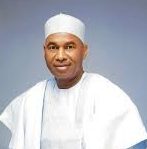
Opinion: Galadima’s Identity Should Not Define His Leadership Prospects


As conversations around Adamawa’s 2027 governorship race continue to intensify, one issue repeatedly surfacing in political discussions is whether ethnicity should determine who succeeds Governor Fintiri or whether leadership capacity and inclusiveness should remain the defining factors.
One recurring concern in some quarters is whether the return of a Fulani governor could reopen old wounds and revive fears of exclusion among other ethnic groups. However, such assumptions may not necessarily reflect the personality and political disposition of former PTDF Secretary, Aminu Galadima.
Galadima may be Fulani by birth, but judging from his public engagements and political relationships over the years, there is little to suggest ethnic exclusiveness or Fulani bigotry in his approach to leadership.
Many residents of Adamawa still remember the bitterness that followed perceptions of exclusion during previous administrations, especially complaints that several communities and ethnic groups were sidelined in governance. Those experiences remain part of the state’s political memory and naturally continue to shape current political conversations.

Yet, from what is publicly visible around Galadima, there appears to be an effort to project a different style of politics. His association with individuals from different backgrounds, including figures such as Kelvin Peter and Prof. Maxwell Gidado, who have reportedly acknowledged his support and mentorship at different times, is often presented by supporters as evidence that his outlook extends beyond ethnic considerations.
For those who fear that a Galadima administration would result in Fulani domination of government offices, such concerns may not necessarily align with the image his supporters describe. To them, he appears measured, calm and politically refined rather than confrontational.
His critics often point to his connections with political actors in Abuja as a source of concern. However, supporters argue that political relationships should not automatically be interpreted as subservience, insisting that Galadima has demonstrated independent judgement and should not be dismissed as anyone’s political errand boy.
Ultimately, Adamawa’s 2027 governorship election should be decided on competence, vision, inclusiveness and the capacity to govern rather than assumptions built solely on ethnicity or political associations.