
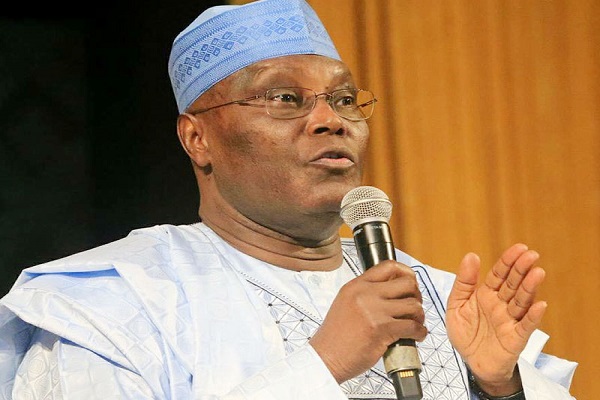
Atiku’s petrol subsidy plan is economic fantasy – Presidency


The Presidency has dismissed former vice-president Atiku Abubakar’s proposal for a targeted petrol production subsidy, describing it as economically unrealistic and warning that it could revive the financial abuses associated with Nigeria’s former subsidy regime.
In a statement issued on Sunday, the special adviser to President Bola Tinubu on media and public communications, Sunday Dare, accused Atiku, the African Democratic Congress presidential candidate, of promoting what he called “a dangerous mathematical fantasy wrapped in political deceit”.
The response followed Atiku’s criticism of the Nigerian National Petroleum Company’s 30-day petrol discount and the federal government’s price modulation framework, which he described as a politically motivated intervention.
Dare argued that Nigeria lacked sufficient government-controlled crude oil to sustain Atiku’s proposal.
According to him, although Nigeria produces approximately 1.8m barrels of crude daily, existing joint venture agreements, production-sharing contracts and other obligations leave the government with fewer than 700,000 barrels of unencumbered crude.
“To propose a blanket ‘targeted production subsidy’ on crude without the physical, unencumbered volume to back it up is pure economic illiteracy,” Dare said.
He warned that such an arrangement could encourage fraudulent transactions, undermine transparency and impose additional pressure on public finances.
Defending the government’s intervention, Dare said NNPC Retail’s temporary petrol discount was designed to cushion consumers against rising international oil prices rather than restore the abolished subsidy.
“When NNPC Retail agrees to sell fuel at landing cost for 30 days during an unprecedented global crude price spike, it is not writing checks to opaque import cartels,” he said.
The Presidency also defended the negotiated N1,350-per-litre ex-gantry ceiling, describing it as a temporary mechanism intended to stabilise prices.
Dare said the administration was expanding compressed natural gas infrastructure, supporting domestic refining and introducing measures to protect consumers from volatile energy costs.
He maintained that removing petrol subsidies and unifying exchange rates had freed substantial government revenues for distribution to states and local governments.
The presidential aide also criticised Atiku’s reported description of Tinubu as a “dull student”, questioning the former vice-president’s credentials in comparison with the president’s.
The Presidency insisted that Tinubu’s economic policies were designed to deliver long-term stability rather than short-term political gains.
Atiku’s response to the latest criticism was not included in the statement.