FG bans honorary degree recipients from using ‘Dr’ title


The Federal Government has banned recipients of honorary degrees from prefixing “Dr” to their names in official, academic or professional usage.
The government said the practice amounts to a misrepresentation of academic qualifications and will henceforth be treated as academic fraud with possible legal and reputational consequences.
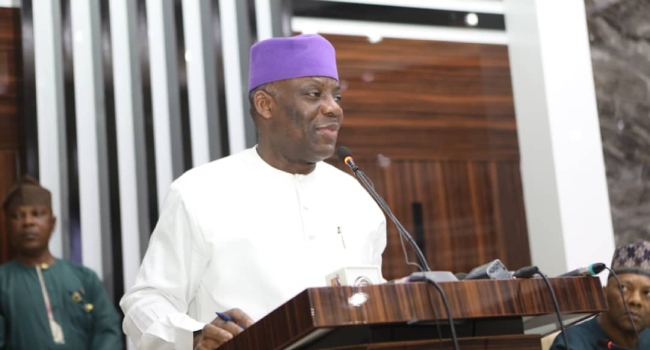
The Minister of Education, Tunji Alausa, disclosed this on Wednesday at the Presidential Villa in Abuja while briefing State House correspondents on decisions approved by the Federal Executive Council at its April 30 meeting.
Alausa, who appeared alongside the Minister of State for Education, Suwaiba Ahmad, said the council approved a uniform national policy regulating the award and use of honorary degrees by Nigerian universities.
According to him, the policy is intended to curb what he described as the abuse and politicisation of honorary degrees, which he said had increasingly been used for political patronage and financial gain.
“The recent trend we’ve seen with the award of honorary degrees has revealed a growing abuse and politicisation of this academic privilege,” the minister said.
“We’ve seen awards being used for political patronage, for financial gain, as well as the conferral of awards on serving public officials, which, as part of the ethics of honorary degree awards, should not happen.”
Under the new policy, honorary degree recipients are prohibited from using the title “Doctor” before their names.
Instead, they are expected to use the honorary designation after their names in a clearly stated format.
Giving examples, Alausa said recipients may write their names as “Chief Louis Clark, D.Lit. (Doctor of Literature, Honoris Causa)” or “Mrs Miriam Adamu, LL.D. Hons.”

He explained that the format is meant to clearly distinguish honorary awards from academically earned doctorate degrees.
“Recipients shall not prefix doctor to their names in official, academic or professional usage,” the minister stated.
“Misrepresentation of honorary degrees as earned academic credentials shall be considered academic fraud and subject to legal and reputational consequences.”
The new regulation also limits the categories of honorary degrees Nigerian universities may award to four recognised types: Doctor of Laws (LL.D), Doctor of Letters (D.Lit), Doctor of Science (D.Sc), and Doctor of Humanities (D.Arts).
In addition, universities that do not run active PhD programmes will no longer be allowed to confer honorary degrees.
Alausa said the restriction became necessary due to the increasing number of newly established universities conferring honorary doctorates despite lacking postgraduate research structures.
The minister added that all honorary degree certificates must clearly contain the words “Honorary” or “Honoris Causa.”
He said the Federal Ministry of Education and the National Universities Commission would issue compliance directives to vice chancellors, registrars and governing councils across the country.
According to him, convocation ceremonies will also be monitored to ensure adherence to the policy, while the government will work with the media to discourage the improper use of academic titles.
Alausa further disclosed that the ministry would publish an annual list of legitimate honorary degree recipients in order to safeguard the integrity of earned academic qualifications.
He noted that the NUC possesses the statutory authority to enforce the policy nationwide.