
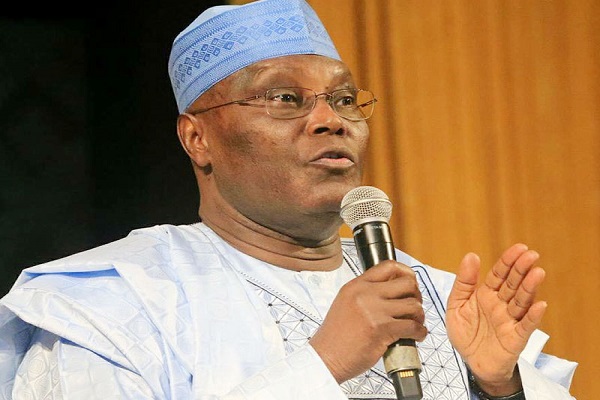
Nigeria risking return to debt trap under Bola Ahmed Tinubu, says Atiku Abubakar


Former Vice President Atiku Abubakar has faulted the administration of President Bola Ahmed Tinubu over reports that the Federal Government is seeking a fresh $1.25bn loan from the World Bank, warning that the country is drifting deeper into a debt crisis with little improvement in the living conditions of ordinary Nigerians.
In a statement issued on Sunday through his media aide, Olusola Sanni, Atiku described the proposed loan facility as another sign of what he termed the Tinubu administration’s growing reliance on borrowing despite mounting economic hardship nationwide.
He said it was troubling that a government elected on promises of economic recovery had become associated with what he called excessive borrowing while citizens continue to struggle with soaring inflation, high energy costs, food shortages and declining purchasing power.
According to him, the increasing dependence on loans had become alarming and lacked transparency.
“This borrowing spree is now reckless, opaque and dangerously routine.
“Nigerians were told these loans would revive infrastructure, improve power supply and strengthen the economy, yet citizens are still trapped in darkness, roads remain in deplorable condition, businesses are shutting down because of unbearable energy costs, and hunger is spreading across the country,” Atiku said.
The former vice president also urged the World Bank and other international lenders to impose stricter conditions on future credit facilities to Nigeria and ensure stronger compliance with accountability and transparency measures.
“At this stage, the World Bank and other creditors must adopt stricter safeguards to ensure these loans are properly monitored and utilised according to agreed conditions,” he stated.
Atiku questioned why the Federal Government continued to seek loans despite repeated claims by officials that reforms such as fuel subsidy removal, exchange rate liberalisation and improved tax collection had significantly increased national revenue.
He argued that Nigeria’s growing exposure to International Development Association loans placed the country among nations with the highest World Bank debt profile, alongside Bangladesh and Pakistan.
According to him, such figures contradict claims by the Tinubu administration that government revenue generation had improved substantially.
The former presidential candidate further warned that Nigeria risked sliding back into the kind of debt crisis it faced before obtaining relief from the Paris Club debt relief for Nigeria during the administration of former President Olusegun Obasanjo.
“It is unfortunate that the same country that successfully escaped the Paris Club debt burden through prudent management, reforms and strategic negotiations under the Obasanjo Atiku administration is now heading into another cycle of debt dependency,” he said.
Atiku maintained that the debt relief secured in 2005 and 2006 was achieved through fiscal discipline and international credibility, adding that the gains of that period were now being undermined.
He accused the current administration of treating borrowing as a substitute for effective governance.
“Loans are not achievements. Debt is not development. Mortgaging the future of unborn Nigerians to cover present failures is not economic management but economic vandalism,” he stated.
The former vice president also challenged international financial institutions to demand measurable results before approving additional loans for Nigeria.
According to him, lenders should insist on evidence of impact and prudent utilisation before extending further support to an administration that critics say has shown little improvement in key sectors.
“No responsible lender should ignore the warning signs. When a government continues borrowing while citizens see no meaningful progress in electricity, healthcare, education or infrastructure, serious questions must be asked about fiscal discipline and governance credibility,” he added.
Atiku warned that relying on loans to address nearly every economic challenge could weaken the nation further and place future generations under heavier financial burdens.
He said the Tinubu administration must understand that borrowing alone could not solve governance problems, stressing that economic recovery required vision, discipline, productivity and public trust.
The former vice president also called on the Federal Government to publish comprehensive details of all loans secured since Tinubu assumed office, including their terms, disbursement status and the projects attached to them.
Since taking office in May 2023, the Tinubu administration has relied on both domestic and foreign borrowing to finance budget deficits, support reforms and stabilise public finances.
Data released by the Debt Management Office showed that Nigeria’s debt profile rose sharply following the devaluation of the naira and additional borrowing by the Federal Government and state governments.
The Federal Government has consistently defended its borrowing strategy, insisting that many of the loans are concessional facilities directed towards infrastructure, social intervention programmes, power sector reforms and economic stabilisation efforts.
Several multibillion dollar facilities linked to healthcare, agriculture, palliative support after fuel subsidy removal and power sector recovery have either been secured or are currently under negotiation with the World Bank.
Government officials have argued that the administration inherited a fragile economy weighed down by subsidy payments, weak revenue and rising debt servicing obligations, making external financial support necessary to avoid fiscal collapse.
However, critics insist that the rapid accumulation of debt, combined with rising inflation, naira depreciation and worsening living standards, has heightened concerns about the country’s long term debt sustainability.
As of the time this report was filed, neither the Presidency nor the Federal Ministry of Finance had issued an official response to Atiku’s remarks.