South Africa rocked by anti-migrant protests as thousands demand mass deportations


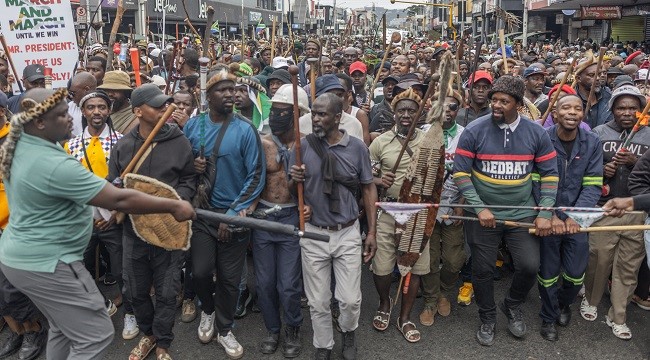
Thousands of people marched across major cities in South Africa on Tuesday, demanding the removal of undocumented foreign nationals as a weeks-long anti-immigration campaign reached its unofficial June 30 deadline.
The nationwide demonstrations, organised by citizen-led vigilante groups, came amid rising tensions that have forced thousands of migrants to flee and left at least four people dead.
Police maintained a heavy presence in cities including Johannesburg, Durban and Cape Town to prevent violence. However, there were isolated incidents of looting, stone-throwing and confrontations, particularly near Johannesburg, where security forces escorted several foreign nationals away from an angry crowd carrying sticks.
In Johannesburg, South Africa’s commercial hub, many businesses remained closed, public transport services were disrupted and streets were largely deserted as demonstrators marched through the city centre waving national flags and placards under the watch of heavily armed police officers.
In Durban, protesters dressed in traditional Zulu warrior attire carried spears, shields and whips, with some wearing leopard skins.
One demonstrator, 48-year-old Brightness Gumbi, said she struggled to afford rent for business premises while accusing undocumented migrants of operating shops and engaging in criminal activities.
“The illegal foreigners manage to pay it because they sell drugs to our people,” she told AFP, adding that she hoped President Cyril Ramaphosa would tighten immigration enforcement.
Cape Town recorded a much smaller turnout, with about 100 protesters marching through the city centre while a separate group staged a counter-demonstration against xenophobia and Afrophobia.
South Africa, one of Africa’s largest economies, has long attracted migrant workers from across the continent despite facing unemployment above 30 per cent, persistent crime and deteriorating public services.
Groups behind the protests argue that undocumented migrants are taking jobs and placing pressure on public services, although analysts say migrants are being unfairly blamed for broader governance and economic challenges.
Addressing supporters in Durban, anti-immigration campaign leader Jacinta Ngobese-Zuma called for the large-scale removal of undocumented migrants.
“South Africans have been replaced by illegal foreigners, increasing unemployment,” she said. “We want mass deportation. For the next six months we want the government to get rid of the people who have not left.”
Police said at least four foreign nationals — two Mozambicans, one Ethiopian and one Malawian — had been killed during the latest outbreak of anti-immigrant violence.
Several African governments, including Nigeria, Malawi, Ghana, Zimbabwe and Mozambique, have begun organising voluntary repatriation flights and buses for citizens wishing to leave South Africa.
Authorities said more than 25,000 people had been processed for departure in recent weeks, marking the first time several governments have simultaneously organised large-scale repatriations following anti-foreigner unrest in South Africa.
Hundreds of migrants, mainly from Zimbabwe and Malawi, gathered at collection points in Johannesburg, Cape Town and other cities while waiting for transport home.
Many said they had lost their jobs or been evicted by landlords concerned about attacks by vigilante groups or possible sanctions from authorities.
“The people in South Africa, they don’t want us here. I’m scared,” a 23-year-old Zimbabwean woman, who declined to be identified, told AFP while waiting alongside about 2,000 others for buses.
In Durban, only a few dozen Malawians remained at a departure centre after thousands had already been transported home or transferred to a processing facility near the Zimbabwean border.
“I thought I could stay on but neighbours warned us last night,” 32-year-old Adam John said. “I felt that it is better to try and get home while I still can.”
Fearing a repeat of the widespread unrest five years ago, when about 350 people were killed during riots and looting, the South African government deployed large numbers of security personnel ahead of Tuesday’s demonstrations.
President Cyril Ramaphosa announced tougher measures to tackle illegal immigration while urging traditional leaders to help calm tensions.
Analysts say the renewed anti-immigration campaign has become increasingly politicised ahead of South Africa’s local government elections scheduled for November.
South Africa has experienced repeated outbreaks of xenophobic violence over the years. In 2008, attacks targeting foreign nationals left 62 people dead.